
You’ve probably looked at an electric vehicle (EV) price tag and thought: how is this thing worth that much? Especially when you know that charging one costs a fraction of what you’d spend on petrol.
It’s a fair question. And the answer, bluntly, is tax. Two taxes, in fact.
Every electric car imported into South Africa gets hit with a 25% import duty the moment it arrives here. That alone adds tens of thousands of rands to the price before the car has even reached a showroom.
On top of the import duty, there’s something called an ad valorem tax—a sliding scale levy based on the landed cost of the vehicle. Depending on the price of the car, this can add up to another 30%.
So you’re looking at a vehicle that could be 25% to 35% cheaper if those taxes didn’t exist. Take any EV on the market right now, knock off 30%, and ask yourself how affordable it suddenly becomes.
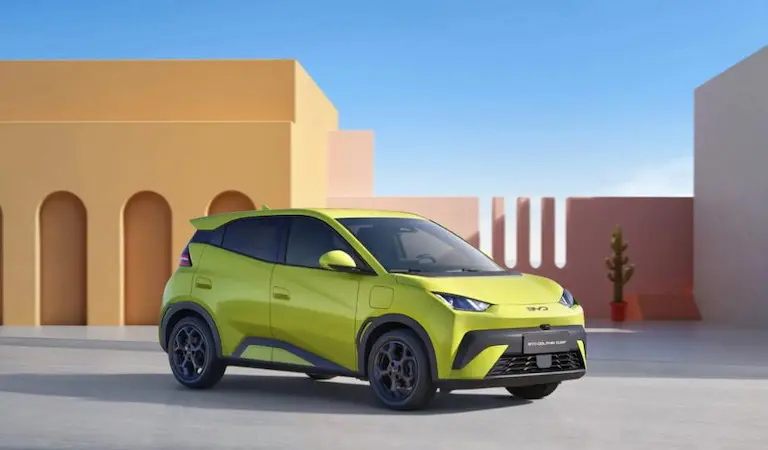
The entry-level BYD Dolphin Surf, which launched in South Africa at around R340,000, is already changing the conversation. Remove those taxes and you’re looking at a car that could realistically sit in the R230,000 to R250,000 range. That’s a very different market animal.
Why does the tax exist?
The short answer is that it’s there to protect local vehicle manufacturers.
South Africa has a 120-year history of making cars, a large trained workforce, and a well-developed supply chain. The government has long used import duties as a way to shield that industry from cheaper foreign competition.
It’s not a uniquely South African thing. Motor manufacturers worldwide have powerful lobbying bodies, and they’ve been very effective at convincing governments to keep those protections in place.
The problem is that the world has moved on.
In China—which now accounts for more than half of the global car market—EVs have already reached price parity with petrol vehicles. More than 60% of new vehicles sold there are electric.
The technology has matured, the manufacturing has scaled, and the prices have dropped dramatically. South Africa is still taxing EVs as if they’re luxury imports.
What would happen if the taxes were scrapped?
Industry voices are calling on the Treasury to either abolish EV import duties entirely or grant a five-year tax holiday.
The argument is simple: yes, the government gives up some import duty revenue in the short term.
But every EV on the road means less diesel and petrol being imported. Given that South Africa’s local refining capacity has largely disappeared, that’s a significant saving on the country’s import bill.
The proposal is to run the tax holiday for five or six years —long enough to build critical mass in the local EV market, attract manufacturing investment, and potentially get to a point where vehicles are being assembled locally.
At that point, the import duties could come back, because there’d be a local industry worth protecting. It’s a straightforward cost-benefit calculation. The government just hasn’t done it yet.
Electric vehicles are not inherently expensive.
In the world’s biggest car market, they’re already cheaper than petrol cars. In South Africa, we’re paying a premium that exists largely to protect an industry that is itself going electric whether it likes it or not.
